Meet The Group
Below you'll find a short bio of each of the members of the Anderson lab.
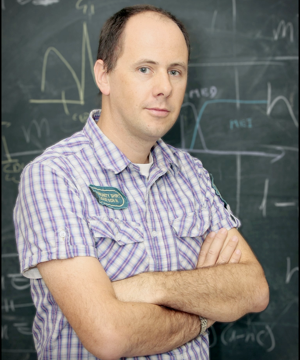
Alexander R. A. Anderson (PI)
Chair of the Integrated Mathematical Oncology (IMO) department and Senior member at Moffitt Cancer Center. Dr. Anderson performed his doctoral work on hybrid mathematical models of nematode movement in heterogeneous environments at the Scottish Crop Research Institute in Dundee, UK. His postdoctoral work was on hybrid models of tumor-induced angiogenesis with Prof. Mark Chaplain at Bath University, UK. He moved back to Dundee in 1996 where he worked for the next 12 years on developing mathematical models of many different aspects of tumor progression and treatment, including anti-angiogenesis, radiotherapy, tumor invasion, evolution of aggressive phenotypes and the role of the microenvironment. He is widely recognized as one of only a handful of mathematical oncologists that develop truly integrative models that directly impact upon biological experimentation. His pioneering work using evolutionary hybrid cellular automata models has led to new insights into the role of the tumor microenvironment in driving tumor progression. Due to his belief in the crucial role of mathematical models in cancer research he moved his group to the Moffitt Cancer Center in 2008 to establish the Integrated Mathematical Oncology department.
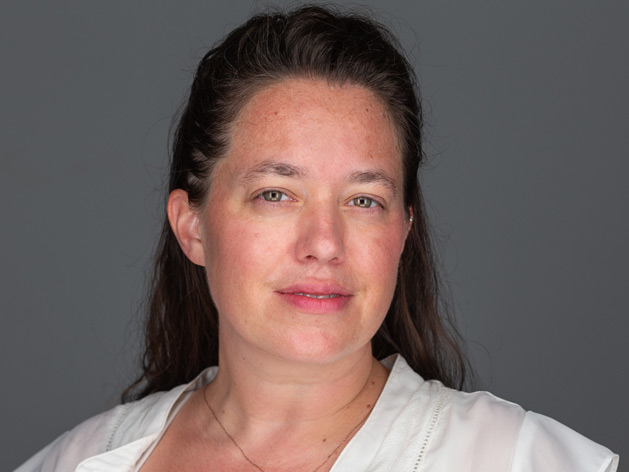
Jill A. Gallaher
Jill is a Research Scientist who joined the lab in December 2010. She has an B.S. in physics from the University of Missouri and a Ph. D. in biomedical physics from East Carolina University, where she worked with Martin Bier with developing mathematical models involving the cell membrane, ion traffic, and lipid thermodynamics. At the IMO, Jill is interested in quantifying tumor heterogeneity and its effect on treatment response, using evolutionary principles to guide treatment schedules, and integrating clinical data into models. She is specifically focused on improving treatment strategies and adaptive therapies in brain cancer and metastatic castrate resistant prostate cancer using spatial agent-based and multiscale models.
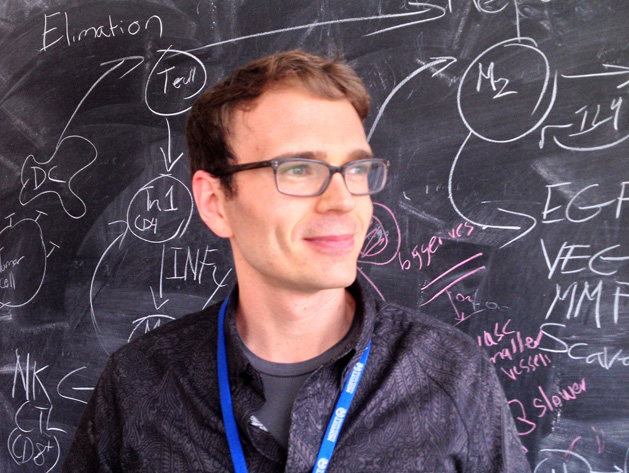
Chandler Gatenbee
Chandler received his Masters is Biological Anthropology at the University of Utah, followed by a Ph.D in Biology at the University of Louisville. He is a Research Scientist whose work is focused on tumor-immune eco-evolutionary dynamics. He uses population models, agent based models, and evolutionary game theory to study how tumors evolve the ability to escape immune predation, and the subsequent treatment implications. This is complemented by the development of tools to process and analyze histology. Ecological analyses can be conducted on the data collected by these tools, and the findings can be used to inform and verify modeling decisions and predictions, respectively. It is hoped that the integration of modeling and data will produce actionable insights that can be used treat, and ideally prevent, cancer.
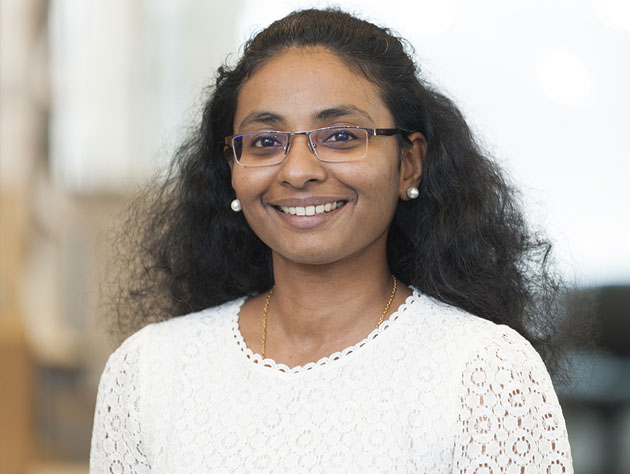
Sandhya Prabhakaran
Sandhya is a Research Scientist interested in combining Machine Learning models with Deep Learning architectures and developing statistical theory, particularly to address problems in Cancer Biology and Computer Vision. Specifically, she is interested in understanding spatial relationships in the tumor-immune microenvironment using emerging multiplexed imaging technologies. These technologies will enable the precise interpretation of cellular states and the characterization of tumor-immune interactions in situ and at the single-cell level. Before joining Moffitt Cancer Center she was a Postdoctoral Research Scientist with Dr. Dana Pe’er at Memorial Sloan Kettering Cancer Center, NYC and at Columbia University in the City of New York. She received her Ph.D. from the Department of Mathematics and Computer Science, University of Basel (Switzerland) and her Masters in Intelligent Systems (Robotics) from School of Informatics, University of Edinburgh (Scotland).
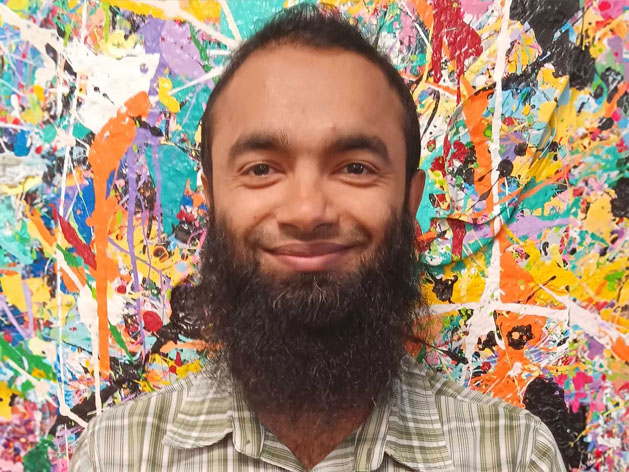
M A Masud
M A Masud joined the lab in September 2023 as a Postdoctoral Research Fellow. He received his Ph. D. in Mathematics from Kyungpook National University, Daegu, South Korea. He is interested in exploring biological processes using mathematical modeling of dynamical systems. More specifically his research interest includes a data-driven understanding of tumor growth and treatment decision making. He will mostly be using differential equation-based approaches, data-fitting techniques, and agent-based models to develop treatment stratagies for pateients on evolutionary therapy trials.
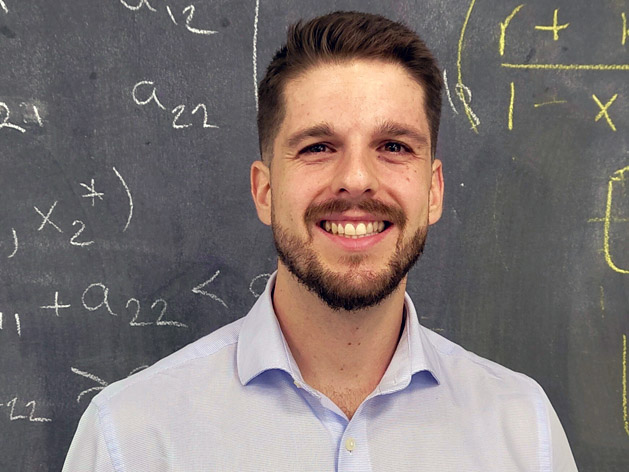
Daniel Camacho Gomez
Daniel joined the lab in September 2025 as a Postdoctoral Research Fellow. He received his Ph.D. in Mechanical Engineering at the University of Zaragoza in the M2BE lab, where he continued as a Postdoctoral researcher. His research focused on developing computational frameworks to simulate cell behavior and tumor growth across multiple scales, using both agent-based models and continuum models based on partial differential equations. He also worked on calibration techniques to validate these models against in vitro data and patient-specific clinical data. Currently, Daniel is passionate about integrating machine learning into mechanistic models to create synergistic approaches for reproducing complex biological phenomena and advancing personalized clinical predictions with meaningful interpretations.
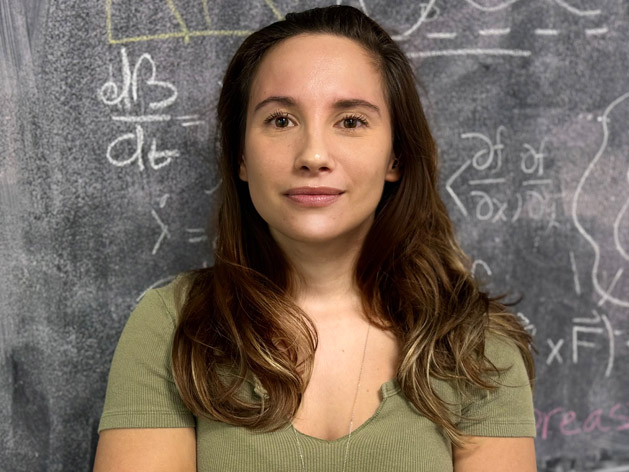
Agata Xella
Agata is a graduate student in Moffitt’s IMO PhD program who joined the lab in April 2024. She comes to mathematical oncology after a journey through brain cancer research. Her Masters’ thesis was on Medulloblastoma development and she most recently worked on CAR T-cell therapy for Glioblastoma under Christine Brown. Her transition from wet lab was sparked by a desire to better understand and use the biological data she was generating and to bridge interdisciplinary gaps and broaden the scale of their relevance. Agata aims to bring her experimental experience to the lab and use an integrated approach to explore the complex dynamics of cancer treatment resistance and potentially how to overcome it; her interests include plasticity, combination therapies, and tumor-immune interactions.
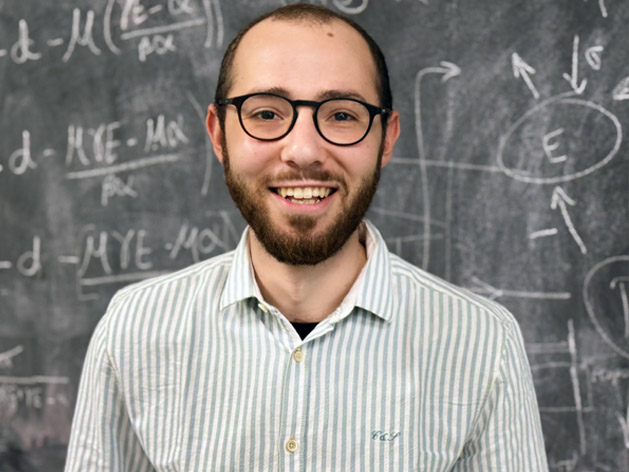
Kevin Scibilia
Kevin joined the lab in January 2025 as a graduate student in Moffitt's IMO PhD program. He previously received his Bachelor’s and Master’s in Computer Science at the Technical University of Munich, Germany, where he worked on combining mathematical and biophysical models of Glioblastoma and Non-Small Cell Lung Cancer (NSCLC) with Deep Learning approaches. Within the interdisciplinary setting of IMO, he is exploring clinically translatable prediction methods that will drive novel multi-agent combination therapies in NSCLC. Such methods use mathematical models, capturing longitudinal dynamics of ecological processes, in combination with state-of-the-art imaging and computational methods.
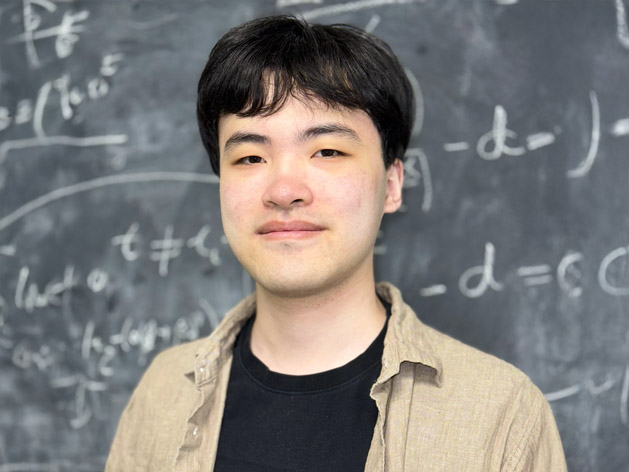
Yunli Qi
Yunli joined the lab in October 2024 as a DPhil student through the Systems Approaches in Biomedical Science Doctoral Training Centre at the University of Oxford, UK, and is jointly supervised by me and Philip Maini. Yunli’s research investigates how spatial interactions influence therapeutic resistance in cancer, combining mathematical modeling with deep reinforcement learning. He is particularly focused on leveraging tumor imaging data to estimate tumor responses to treatment at an ecological level. Ultimately, his work aims to deepen the understanding of treatment resistance mechanisms and optimize therapeutic strategies.